
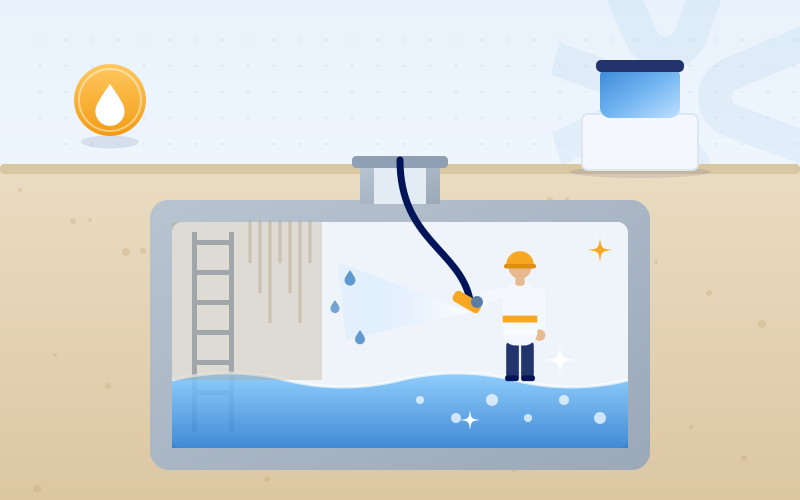
Key takeaways
- Underground and rooftop tanks should be cleaned and disinfected at least every six months.
- Clean immediately if the water changes colour, smell or taste, or after network maintenance.
- Professional cleaning covers draining, sediment extraction, pressure washing, safe disinfection and rinsing before refilling.
- Underground tanks are confined spaces and can be hazardous, so they are best handled by a trained, equipped team.
- Cracks or a falling level without usage are signs the tank needs insulation.
Your water tank is where the water for your home or building sits for hours or days before it reaches the tap. Over time it collects sediment and dust, and algae and bacteria can grow — especially in Riyadh’s heat. This guide answers the questions we hear most from home and building owners.
Why clean a water tank regularly?
Even when the water entering the tank is clean, the tank itself gradually becomes a place where impurities build up:
- Sediment and sludge settling at the bottom with every refill.
- Dust entering through vents or a poorly sealed lid.
- Algae and slime on the walls, particularly with heat and light.
- Scale deposits on walls and pipes.
Neglecting cleaning affects the water’s taste, colour and smell, reduces the efficiency of filters and heaters, and can clog fittings.
How often should a tank be cleaned?
The general rule: at least every six months. Some situations call for cleaning right away:
| Situation | Recommended action |
|---|---|
| Normal household use | Clean and disinfect every 6 months |
| Water changes colour, smell or taste | Clean immediately and inspect the tank |
| After maintenance or a break in the water network | Clean before full use |
| Property left empty for a long time | Clean before moving in or reopening |
| After construction or renovation near the tank | Clean to remove dust and debris |
Signs your tank needs cleaning
- Cloudy, yellowish or brownish water.
- An unusual smell or taste.
- Particles or sediment in tap aerators and filters.
- More than six months since the last cleaning.
- A loose or broken lid that lets dust and insects in.
Underground vs rooftop tanks
Underground tanks are usually large concrete tanks that collect more sediment. They need pumps to drain, suction and pressure-washing equipment, plus a check of the walls for cracks.
Rooftop tanks are usually plastic or fibreglass and smaller, but direct heat speeds up slime formation. We recommend cleaning both in the same visit so sediment doesn’t move from one to the other.
The professional cleaning and disinfection process
- Inspection of the tank inside and out, including the lid, float valve and vent.
- Draining with a suitable pump, planned around your water needs during the work.
- Sediment extraction of sludge collected at the bottom.
- Pressure washing of walls, floor and ceiling to remove algae and slime.
- Disinfection with safe products approved for drinking water.
- Rinsing and drainage of wash water before refilling.
- Sealing and reporting: the lid is sealed and you are told about any cracks or leaks.
Can you clean a tank yourself?
Small rooftop tanks can be cleaned carefully by the owner, but an underground tank is a confined space with limited ventilation, and entering it without proper equipment is risky. Disinfection also needs products suitable for drinking water, used correctly and followed by a full rinse. That is why a trained team with ventilation, protective and suction equipment is the safer choice.
When does a tank need insulation?
If you notice the level falling without usage, an unexplained rise in water bills, damp around the tank or visible cracks in its walls, the tank most likely needs insulation. It is done after cleaning and drying the tank and repairing cracks, then applying layers of drinking-water-grade epoxy. Learn more on our water tank insulation page.
Keeping the tank clean between visits
- Keep the lid sealed at all times.
- Fit a mesh over the vent to keep insects and dust out.
- Check the float valve and stop valves regularly to avoid overflow or leaks.
- Clean tap aerators and filters regularly.
- Note the date of the last cleaning so you know when the next one is due.
Summary
Cleaning your tank every six months is a simple habit that protects your family’s health and your water quality, and extends the life of the tank and fixtures. If you notice any change in the water, don’t wait for the scheduled date. Takamul provides water tank cleaning and disinfection in Riyadh for underground and rooftop tanks, with a condition check and advice on any insulation needs.
FAQ
How often should a household water tank be cleaned?
At least every six months for both underground and rooftop tanks, and immediately if the water changes colour or smell or after water network maintenance.
How long does tank cleaning take?
Usually two to four hours for household tanks; larger or heavily sedimented tanks take longer.
Do I need to cut the water supply during cleaning?
The tank is drained during the work, so store enough water for the cleaning hours; the tank is refilled after rinsing.
Water Tank Cleaning & Disinfection in Riyadh
Underground and rooftop tanks washed and disinfected with safe, approved products for clean, safe water.